Showing posts with label Book Review. Show all posts

Wednesday, October 22, 2014

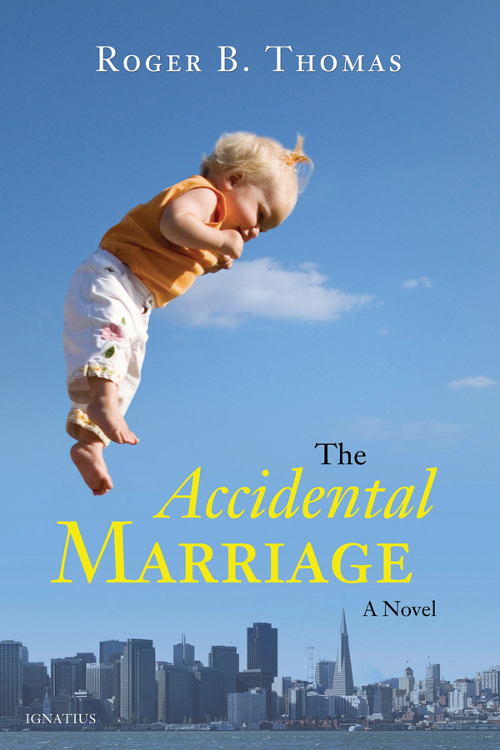
The Accidental Marriage by Roger B. Thomas - Book Review


I was intrigued when I read the description of the new novel published by Ignatius Press, The Accidental Marriage. How would a Catholic publisher cover the subject matter of a man living an actively gay lifestyle, fathering the child of a woman living with her lesbian lover, and they end up raising the child together? I often remarked to my husband that this was going to be a difficult book to review as I read it. Difficult not because the book wasn't a good one, but due to the complexity of the subject matter. I was hoping that the novel wouldn't be heavy-handed on either end of the spectrum of this controversial topic, and I was not disappointed. 

Scott and Megan are friends who enjoy lunch together on occasion. During one of their visits, Megan mentions that her partner wants Megan to have a baby. Scott offers to father a child for the couple and not long after she becomes pregnant, the relationship between Megan and her partner ends. Scott does what comes naturally to him and takes Megan in, marrying her so that she would have medical coverage during the pregnancy. The struggle for each of them to maintain emotional boundaries is palpable. Each of them are so immersed in their sexual lifestyle and identity, they bristle against obvious natural consequences from the situation they've found themselves in. 

There were no preachy moments in the book. It is neither pro, nor anti-gay. The characters are well-developed and likable. I found myself cheering for them, feeling a parental urge to hug them and tell them it would all work out okay in the end. Certainly each of us have struggled with identity, fought against what we knew we longed for and needed. Scott and Megan are no exception.

If you are interested in a book club study/discussion guide for this book, there is one available HERE. 

I give The Accidental Marriage 4 out of 5 stars. 

_______________________________________________________

The Catechism of the Catholic Church on homosexuality:

2357 Homosexuality refers to relations between men or between women who experience an exclusive or predominant sexual attraction toward persons of the same sex. It has taken a great variety of forms through the centuries and in different cultures. Its psychological genesis remains largely unexplained. Basing itself on Sacred Scripture, which presents homosexual acts as acts of grave depravity, tradition has always declared that "homosexual acts are intrinsically disordered."They are contrary to the natural law. They close the sexual act to the gift of life. They do not proceed from a genuine affective and sexual complementarity. Under no circumstances can they be approved.
2358 The number of men and women who have deep-seated homosexual tendencies is not negligible. This inclination, which is objectively disordered, constitutes for most of them a trial. They must be accepted with respect, compassion, and sensitivity. Every sign of unjust discrimination in their regard should be avoided. These persons are called to fulfill God's will in their lives and, if they are Christians, to unite to the sacrifice of the Lord's Cross the difficulties they may encounter from their condition.
2359 Homosexual persons are called to chastity. By the virtues of self-mastery that teach them inner freedom, at times by the support of disinterested friendship, by prayer and sacramental grace, they can and should gradually and resolutely approach Christian perfection.

United States Conference of Catholic Bishops statements on homosexuality are HERE. 

Catholic Answers Tract on homosexuality is HERE. 

Pope Francis stated that same-sex marriage is 'anthropological regression' HERE. 

Cardinal Bergoglio (now Pope Francis) on same-sex marriage HERE. 


Friday, June 6, 2014

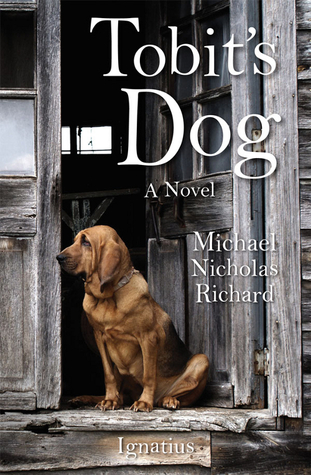
Tobit's Dog: A Book Review

At the beginning of 2014, I decided to set the goal of 25 books to have completed by the end of the year. I say completed because I suffer from what my husband affectionately refers to as 'shiny ball syndrome.' In other words, I am easily distracted like a dog who is focused on something, only to catch a glimpse of a ball out of the corner of her eye and chase the ball, completely forgetting about the last object of interest. I love reading and keep track of my book collection and progress using the website Goodreads. Goodreads reminds me today that I am currently reading three books at the same time, down from four due to a late-night finish of a novel yesterday. It takes a REALLY good book to keep my interest and Tobit's Dog is that book.

Tobit's Dog

Tobit Messager is a black man living in the U.S. south during the Great Depression. As if being poor and struggling to care for his family were not enough, he had to face the many horrors of persecution so common during that dark time in our history. Due to nothing other than the color of his skin, Tobit was treated like a pariah.As a Catholic, he was unable to attend Mass because of the great distance between churches in an area where Protestantism was commonplace. Though unable to be part of the larger Catholic community, Tobit kept the faith alive and never gave into despair. In the novel, he faces unbelievable hardships, yet he never succumbs. Always doing the right thing, even when doing wrong would be easier and less painful to him and his family, Tobit chooses a path of charity and honor. The dog? Okra is a mutt who was discarded along with his littermates. Like Tobit, he is always faithful and can be relied upon in the most dire of circumstances. The rest of the characters in the book are well fleshed-out. Some characters you fall in love with; others you can't help hoping that God will mete out His punishment - now. 

This novel is a message of charity in the face of hatred; trusting in God's will despite being thrust into the the worst situations imaginable. This is not a light-hearted read, so if you are looking for a fluffy inspirational story, this book is not it. The horrors that people like Tobit faced are on full display in all of their ugliness. Violence within the storyline plays a vital role, and it is within those gut-wrenching moments that I found tears streaming down my cheeks. I was touched to the core by the strength and honor of the main characters in the book. Tobit never considers himself a victim, a trait that often appears to be non-existent today. 

Delightfully written, Tobit's Dog is the rare book that left an indelible stamp on my heart. The descriptions of people, settings, and situations paint just enough in your mind. I felt like I was right there with the Messagers as they faced life, though the book is never heavily weighed down with unnecessary words. There are clear Catholic undertones throughout the book, yet never preachy, and is equally approachable for people of any background. My only suggestion (after you get your hands on this book!) is that if you don't remember much about the book of Tobit in Sacred Scripture, read it AFTER you read Tobit's Dog.

*If you are interested in a book club study/discussion guide, there is one available HERE. 

Wednesday, May 21, 2014

Book Review: The Last Days of Jesus by Bill O'Reilly


I recently read The Last Days of Jesus: His Life and Times by Bill O'Reilly. If I were to rate the book using a five-star system, I would give it 3.5 stars. 

What I liked: The easy to read format enriched with informative illustrations, maps, and historical timelines. The author described the culture, regional lifestyles, religious beliefs, and political issues of the time period very well. 


What I didn't like: Though a Catholic, the author didn't use a Catholic translation of the Bible for reference. He said that Jesus died in 36 AD, which is not correct. Mary Magdalene is referred to as a prostitute, which is often alleged but no proof exists that it was indeed the case. The title of the book is not a good choice, as the author covers the entire life of Christ. Much of the story told by the author is shared with a great deal of poetic license, filling in the blanks left by historical texts and Scriptures with a likely story line.


This is a good book for adolescents and up, but should be accompanied by Sacred Scripture and good catechesis.


Tuesday, April 23, 2013

Book Review: The Christian Alphabet Book

Delightfully illustrated, authentically Catholic, and spiritual food for the Domestic Church. Those are the words that encapsulate my review of the book: The Christian Alphabet Book: Teaching Children about Jesus, Prayer, and the Bible by Tracy Sands.


When I was offered a review copy, I thought I was receiving a children's book. Once I received it and had the opportunity to skim the pages, I quickly realized that it is a whole family book. Much more than a book to teach your preschooler the alphabet, this is a tool that will become a family heirloom - seriously.

In a nutshell:
  • Each letter of the alphabet is a beautiful illustration containing ancient and modern Christian symbols used to teach a lesson
  • Every page highlights a different letter, and more important, a lesson for family discussion
  • For each letter, the right-hand page has a 'seek and you shall find' activity using the symbols. On the left-hand page, there is a basic lesson and fun activity. The primary lesson is highlighted in red and a prayer closes out the page. 
  • Scripture quotes taken from: 
Having said all this, though I have found nothing contrary to orthodox Catholic teaching, it is important to note that it is for all Christian families.This book contains no hot-button theological topics that separates Catholic theology from the theology of other Christian communities. It is entirely Christo-centric, teaching families about the loving God who sent His Son, our Savior. I cannot recommend this book enough.

The author also offers various items at her website, including a cd with songs to go with the book and personalized frameable name art.  

Thursday, April 18, 2013

Book Review: Francis - The Journey and the Dream, 40th Anniversary Edition

Our latest book review for The Catholic Company is on Francis - The Journey and the Dream, 40th Anniversary Edition. This book was reviewed by guest +Ponderings+ blogger, Jean.

Francis: The Journey and the Dream: 40th Anniversary Edition


So, right off the bat I am disappointed. In the forward, John Michael Talbot says “it is not a historical treatment … the writer takes artistic license … not a Franciscan biography or history and must be read that way."  I’m thinking historical romance or the legend of Robin Hood.  I thought I was sitting down to read more historical biography, less prose. So with grumpy attitude firmly in place, I began to read Francis: The Journey and the Dream.

Fr. Bodo has a cozy  way of writing that makes it easy to get lost in his words and imagery.  I journeyed with Francis as he struggled with his choice of living the gospel,  the joy, the doubts, the gratitude, the determination to follow his dream. And though this book turned out to not be the book I had hoped it would be, it did turn out to be a good book for me. 

This is an easy reading book that offers an inspiring tale of the life of St. Francis and his attempt to live his life according to the example set by Jesus. I can’t imagine anyone being able to read it without some prayerful reflection into their own journey. Happy trails!

*Please support Catholic businesses. The Catholic Company is the best resource for all your seasonal needs such as First Communion gifts as well as ideas and gifts for the special papal Year of Faith.

Saturday, February 2, 2013

Book Review: Lectio Bible Study

In recent years, I've been feeling a tug toward Lectio Divina, or "divine reading." I have enjoyed several good group Bible study programs, yet I yearned for something deeper - something that not only educated me, but helped me to quietly listen to what God was telling me. I was excited to have the opportunity to review a copy of Stephen J. Binz's Lectio Divina Bible Study: Learning to Pray in Scripture as part of The Catholic Company's Reviewer Program.

Softcover, 192 pages. $9.95

Mr. Binz combines Sacred Tradition with Church scholarship, approaching complex topics by first using study, then meditation, and finally internalization of the assigned Scripture. The process as it is described may at first sound intimidating, but don't let it discourage you. The process is not only for people who have a theological background or have a rich prayer life. This book will show you than anyone can approach Sacred Scripture from a fresh perspective and be able to hear the voice of God through His Word.

In my opinion, the ideal situation would be to use the book with a group. There is something amazing that happens when you get together with others who share your faith. It can be a beautiful, life-changing experience if you are able to start a group study - even if you can meet with just one other person. No expertise is necessary. The book guides you on how to set up a group and conduct the meetings. Some of us don't have the opportunity to meet with others for various reasons and the book would be excellent for self-study as well.

Perfect gift for yourself during the upcoming Lenten season!

Wednesday, March 14, 2012

Book Review: "Legacy of Love" by Kimberly Hahn

"She hath opened her mouth to wisdom, and the law of clemency is on her tongue. She hath looked well to the paths of her house, and hath not eaten her bread idle. Her children rose up, and called her blessed: her husband, and he praised her. Many daughters have gathered together riches: thou hast surpassed them all.  Favour is deceitful, and beauty is vain: the woman that feareth the Lord, she shall be praised. Give her of the fruit of her hands: and let her works praise her in the gates."-Proverbs 31:26-31

It was a delight to read Legacy of Love: Biblical Wisdom for Parenting Teens and Young Adults by Kimberly Hahn. When I received the book from The Catholic Company for review, I thought that it would probably be a reference book and not one that I would easily read from back to front. I could not have been more wrong.

Softcover, 247 pages, $14.99 

 
Legacy of Love is a book that kept me up at night. I would promise myself to finish just one more chapter, and then the next chapter would draw me in to yet another block of sleepless time. This book is the fourth installment in the Life-Nurturing Love series based on Proverbs 31:10-31 and I believe God had a hand in delivering the copy I needed at this moment in my life. Raising a child of God in our culture requires a firm commitment to the Domestic Church which is lacking in many Catholic households.When our son was born, I was struck with the awesome responsibility we were given in order to raise this child to be a Godly man. Mrs. Hahn's words spoke to me like I was her only intended audience. It was written expressly for me.

In discussing the attitude toward parenting teens, she said "Each child is a gift from God. God is the source of all good gifts -- including our teens. He has the wisdom and knowledge we need to parent our teens with grace, attentive to the child maturing before us." Her words are comforting and reaffirming as those thoughts were already ruminating in my heart. She goes on to point out that how much our attitude toward the teen years -- whether we anticipate disaster or delight -- makes a great difference in our parenting. 
 
In the chapter entitled "Preparing Your Teen for the Love of His Life" I discovered that Mrs. Hahn and I agree on many points in regard to dating. She also offered many things to consider which I had not yet thought of. Helping our children to understand the purpose of dating, and cautioning our children about the recreational attitude of dating in America are both very important. After all, what is the purpose of a child in fifth grade dating? One would hope they wouldn't actually go out on a date, but why have to be paired up at all? Dating is a big risk for our children and it restricts them from having a social life. As Mrs. Hahn points out, "Maturity is necessary for a lasting marriage. Why allow teens to have serious romantic relationships when marriage is unlikely for years?"  Indeed! If your children believe they may have a vocation for the married life, why encourage them to shop for a mate like they were shopping for clothing? Don't we all know kids who 'try on' a 'girlfriend' or 'boyfriend' only to decide they don't fit after a few days?

This lovely book is divided into six distinct parts, each based on a portion of Proverbs 31. Quotes from Scripture and Church teachings are found on every page, providing much needed guidance for any Christian mother. Readers will learn how to cope with teens and set boundaries, nurture your teen's soul, encourage older teens and young adults as they navigate healthy dating and courtship, and becoming an in-law and grandparent. The message I was left with is that I am not raising my child; I am raising God's child. How my husband and I raise this gift from God can make a lasting impact within our society. The way we raise our children has the ability to firmly mark our world with God's image, reflected in our children and their future families. 

I do not casually recommend books and if you look at past reviews, I have offered less than a glowing review for more than one book I've received. This book is a winner and a must have for every mother who is determined to raise Godly children. It would be a excellent resource for a parish parenting group!

P.S. I typically donate books I receive for review to our parish library so that many others can benefit from good Catholic books. I may be a bit more selfish and keep this gem on my own bookshelf.


Monday, August 15, 2011

Book Review: The Fathers Know Best

 "The Christianity of history is not Protestantism. If ever there were a safe truth it is this, and Protestantism has ever felt it so; to be deep in history is to cease to be a Protestant" 
--John Henry Newman

The Fathers Know Best
My most recent pick for the reviewer program at The Catholic Company was The Fathers Know Best by Jimmy Akin, well known Catholic apologist from the National Catholic Register, Catholic Answers and Catholic radio.  I was thrilled to see it listed in their newest offerings and expected an excellent reference book citing quotes from the Early Church Fathers.   What I received in the mail was much, much more.  

Similar to other books in my library, Mr. Akins divides the quotations attributed to the Church Fathers by topic.  This section is found in Part Two, the largest portion of the book.  Topics in Part Two are: God, Creation, The Sources of Faith, The Church and the Pope, Morality, Sacraments and Worship, Mary, the Saints, the Miraculous and The Last Things.  Topics are further broken down into subtopics, some of which cover the so-called hot topics of the day: female ordination, the permanence of marriage, contraception and sterilization and abortion.  I would consider this portion the go-to section for those engaging in apologetics or wishing to better understand why Catholics believe what they do.  

Lastly, but most interesting to this apologist wannabe, Part One is a refreshing addition to what can be a very repetitive study in other books covering the teachings of the Early Church Fathers.  Often missing from other books, Mr. Akin concisely explains where the writings of the Fathers came from and explains the relationship between the Magisterium and the Fathers' teachings.  He then includes maps of various regions where they lived and preached.  Brief biographies shed light on some lesser known ECFs and refresh the memory about more familiar names.  Closing out Part One of the book, additional writings which are referred to are explained and early heresies and schisms are explained.  While reading through the section on heresies, I was struck by how many of them are quite visible in society (and sadly, sometimes in our own Church) today.  

The Fathers Know Best is undoubtedly an essential book for learning about the early Church and how deeply Scriptural the Church yesterday and today truly is.  


Thursday, March 24, 2011

Children: Begotten, Not Made

Over the past week, I have been strongly conflicted while reading the book Inconceivable.  It is about a Catholic couple who struggled with secondary fertility issues since their first child was born and turned to science in order that they may have more children.  Since men are fallible, a medical error resulted in the mother's pregnancy with a child who was not genetically hers.


On one hand, I was deeply saddened while reading what Carolyn and Sean Savage went through.  Their pain from having dreams of a large family dashed could not prepare them for the pain that was yet to come.  Carrying a child and subsequently falling in love with the boy, all while knowing that the child was to go to his genetic parents upon delivery is for most of us unimaginable.  On top of this, Carolyn had health complications and was putting herself at risk by carrying this child and giving him the gift of life.  As Carolyn noted in the book, she could legally kill the child through abortion, yet would have to give the child to his biological parents upon birth if she chose in favor of life.  Though I personally have not and would never  choose to use In Vitro Fertilization to expand my family, I can feel so much pain while reading the words of both Sean and Carolyn.  They desperately longed to do what was right for their family.  Their plans for a large family resulted in two healthy sons and two miscarriages before they decided to choose IVF to offer them hope for a larger family.  They are blessed to have a daughter who was conceived through IVF and in an attempt to further add to their family, once again underwent the implantation of three lives - embryos -which had been preserved frozen at a fertility clinic.  This is where the real nightmare began.

On the other hand, and this is where the conflict rises, they knew what the Church teaches about IVF and decided that the Church was wrong and that they were right.  They perceived a certain 'discrimination' against people who could no physically get pregnant without resorting to IVF procedures.  A look at Sacred Scripture shows that Carolyn and Sean were not alone in their longing for children.  There are perhaps dozens of instances of infertile couples struggling emotionally in the Bible.

In the Old Testament Elkanah says to his wife who was unable to conceive, "Hannah, why do you weep? And why do you not eat? And why is your heart so sad? Am I not more to you than ten sons?" Of course Elkanah's wife loved him, but she wanted to bear their child. Source

I do not wish to hurt the Savages any more than they have been hurt.  It is they who put this story into a book and over the air waves into our living rooms, so I do feel I have some sort of implicit permission to give my own perspective on their deeply personal story.


It is my hope that they will read these comments and take them with the love and concern they are intended:
  • Children are begotten, not made. 
  • Gifts are to be freely given and accepted - but never forced.  
  • You are deeply in love with a boy who is not genetically yours, and could have been as well with an adopted child.  
  • The Church does not discriminate against you because of your infertility; to the contrary her members want to help you carry the burden of the cross.
  • You made an extreme error in judgement just as everyone does.  Begin anew and put aside your anger with Church teaching. Prayerfully discern why the Church says that IVF is morally unacceptable.
  • Isaac was the only son for Abraham and Sarah, yet through his obedience, Abraham was willing to sacrifice his only son for God. 
  • Put yourself at the foot of the cross during this Lenten season and consider Mary, with her only beloved Son, knowing that he was destined to die upon a cross in order that all of humanity may be saved.  She too carried a child knowing heartbreak would be inevitable.
  • Further encouragement of others to seek IVF not only leads yourself to further separation from God through mortal sin, it also brings others to the same destination. 
  • Having children through 'any means necessary' serves yourself and your needs, disregarding God's will
  • Gestational Carrier is a horrid term and one the Savages used when they decided to have their remaining embryos transferred to another woman in further efforts to expand their family.
  • We all sin and sometimes it is with the best of intentions.  If we are off the mark according to Church teaching, it is best to further investigate where we are wrong - not the Church.
  • Catechism of the Catholic Church: 2378 A child is not something owed to one, but is a gift. The "supreme gift of marriage" is a human person. A child may not be considered a piece of property, an idea to which an alleged "right to a child" would lead. In this area, only the child possesses genuine rights: the right "to be the fruit of the specific act of the conjugal love of his parents," and "the right to be respected as a person from the moment of his conception."

EDITED 3-31-11:  A link to this blog entry was posted on the Savage's Facebook page and a storm followed.  I temporarily removed the previous bullet points, but after having read and re-read the comments made by Mrs. Savage and others, have since returned them where they were initially. There is no delicate way to tell someone that they did something wrong and to suggest alternatives.  Certainly that is the case where someone has been through difficult trauma such as Mrs. Savage experienced.  One additional note:  If a priest comments that he does not support the Church's position on IVF, one should not feel justified as many a priest has also supported gay marriage, artificial contraception, fornication, female ordination and numerous other topics against Church teaching.  No one has stated that a child brought into the world via IVF is any less precious than any other child.  It is not the child, but the means that the parents used to become pregnant that is a serious matter.  Does that mean you think a child born out of wedlock is somehow inferior?  Nonsense.  Please read the information contained in the links at the end of the entry as I have added more.
From their Facebook page (not including comments made by other individuals though some are quite interesting): 
 "It is articles like this that leave me shaking in my chair. Off to take a deep breath and say a prayer for guidance. C"
"I know...it just hurts. I feel like the doctrine is so shortsighted and discriminatory. And, I can't count the number of priests who have whispered to us...."I don't really agree w/the church on this issue!", but are so deathly afraid to speak up and urge the hierachy to reconsider. C"
"[facebook fan], So sorry this upset you so! I just keep torchering myself and rereading it. My goodness, to say that we should have adopted....to say that she would never personally choose IVF...I find it so interesting when people are quick to say what they would or wouldn't do when they have never been in a certain situation. It seems so arrogant."
"I love my church. My next blog post is about my relationship with our parish. A few Sundays ago I sat in my pew and admired all of the families that had gathered for worship. Funny thing about it was...there were many there that have IVF children. They've just never been publicly 'outed' (or chastized). It's really, really hard to reconcile right now. C"
"Interesting thing about the [Catholic Ponderings] author. I think if the church changed it's mind, she'd change her mind. She is a devoted follower. I'm not always a fan of devoted "followers". Instead, I love to read articles, blogs, and published works written by "inspired ponderers". Critical thought, prayerful reflection and the recognition of the dangers of arrogance are probably a more accurate reflection of Jesus' loving approach to mankind. I often wonder what Jesus would say about the Church of our world. My guess is, he'd be shaking his head in disappointment. C"
Inconceivable was, as mentioned, a difficult read.  It was well-crafted, alternating between Sean's perspective and that of Carolyn's, seamlessly taking you through a very painful time in their lives.  I was brought to tears over and over as the waves of painful news mounted against this loving couple who were trying to cope with unimaginable circumstances. A little boy and a family were blessed with life and yet another family was left to cope with incredible emptiness and despair at what they had hoped could have been.  +

*To read more about the Savage family or to order the book, visit their website HERE.  

_________________

For further information on Church teaching in regard to infertility treatments and IVF consult the following:

In Vitro Fertilization: Ethical Implications and Alternatives 

Catechism of the Catholic Church


NaPro Technology:  Moral and Better than IVF

In Virto Fertilization and the Hermeneutic of the Gift  by Christopher West

U.K. article: New fertility legislation will make it illegal to use embryos with a known genetic abnormality in IVF treatment

Read THIS powerful story. Yet another situation where a family is changed forever due to an IVF implantation.  This time, the mother was implanted with three fertilized eggs and found herself pregnant with triplets. Read this agonizing tale as told by the father, sharing what it was like to watch his children die in utero on a monitor after his wife insisted on aborting two of the children. 


Monday, March 7, 2011

Book Review: The Virtues

The Virtues

My latest contribution to the Catholic Company reviewer program is the book The Virtues by Pope Benedict XVI.  At a mere 142 pages, this book is a delightful gem and wonderful gift idea.  The book is divided into two distinct sections:  Part one contains the Theological Virtues and part two features the Cardinal Virtues (see also CCC 1803-1832).  The book is comprised of excerpts from the Holy Father's homilies, addresses and encyclicals paired with quotes from Scripture and the Catechism of the Catholic Church.  

Though I find it imperative for all Catholics to read the encyclicals and addresses as they come available and refer to them for further study, this book highlights the heart of the writings with a special focus upon the importance of living a virtuous life.  From his encyclical Spe Salvi, the Holy Father explains: 

"It is not science that redeems man:  man is redeemed by love.  This applies even in terms of this present world.  When someone has the experience of a great love in his life, this is a moment of "redemption" which gives a new meaning to his life.  But soon he will also realize that the love bestowed upon him cannot by itself resolve the question of his life.  It is a love that remains fragile.  It can be destroyed by death.The human being needs unconditional love.  He needs the certainty which makes him say: "neither death, nor life, nor angels, nor principalities, nor things present, nor things to come, nor powers nor height, nor depth, nor anything else in all creation, will be able to separate us from the love of God in Christ Jesus our Lord" (Romans 8:38-39).  If this absolute love exists, with its absolute certainty, then -- only then -- is man "redeemed," whatever should happen to him in his particular circumstances.  This is what it means to say: Jesus Christ has "redeemed" us.  Through him we have become certain of God, a God who is not a remote "first cause" of the world, because his only-begotten Son has become man and of him everyone can say: "I live by faith in the Son of God, who loved me and gave himself for me" (Galatians 2:20)."

In a time where modern occurrences can leave us feeling there is little to hope, sensing a decline in faith among  people and an overwhelming absence of charity, Pope Benedict XVI reminds us that with the assistance of the Paraclete we too can be redeemed by immeasurable love.  The love of Christ which supersedes all other others.  

I highly recommend this book and think it would be wonderful to have with me next time I attend adoration.  The theological insights shared by our Holy Father can only serve to bring one closer to Christ.  

Wednesday, November 3, 2010

Children's Book Review: Care for Creation

image 

Care for Creation, written by Christy Baldwin, is a delightfully illustrated book for young children.  Timely in topic, the book shares what everyone can do to help care for God's creation supported by Scripture passages.  Though not a book specifically written for Catholic children (Scripture is quoted from the NIV & The Message Bible translations),  the message is a decidedly Christian one: God created the earth for all of us, and in doing so, we are left with the responsibility to care for it.  

Many of the recommendations in the book are simply stated and very easy to understand for even the youngest of children.  Others are more involved and perhaps a bit over the heads of smaller children, such as an explanation of how solar panels capture heat radiating from the sun.  This book is also important not only from a caring for creation perspective, but in these difficult economic times.  We all should be reducing waste and expenses by turning out the unnecessary lights and other electrical items, turning off the water when not needed and walking instead of driving a car when possible.  

I especially like the interactive guide at the end of them book where kids can put what they have learned into action.  Whether being a good steward by picking up trash in a local park with family or planting a garden, no matter how small or large, all are excellent opportunities to spend time in God's creation and with loved ones.

Though the illustrations are bright and communicate a clear message that resounds throughout the book, I wish they included pictures that more children can relate to.  Most children do not have a beautiful in-ground pool to swim in or a beautiful house to live in with cobblestone pathways.  One oversight - in the illustrations and in word - is the protection of God's most precious creation, the human being.  The children riding in the car are not wearing seat belts and human life is not mentioned in the many notes about God's creation.  Despite those sensitivities, I like the book and would recommend it for little ones. It can serve as a launching point for a lifetime of good stewardship.

Saturday, October 30, 2010

Book Review: 2011 Catholic Almanac

I received the Our Sunday Visitor's 2011 Catholic Almanac from The Catholic Company a few days ago as part of their reviewer program and could not wait to dive into it.  At first glance I was overwhelmed with the enormous amount of information contained between the covers.  The book is 640 pages in length (paperback) and printed in very small type (may need the magnifier for this one) and covers nearly everything one can imagine in a single volume.

Topics include:
    2011 Catholic Almanac
  • The year in Review
  • The Journeys of Pope Benedict XVI
  • The Latest on the Sex Abuse Crisis .
  • The Renewal of the Legionaries of Christ
  • Catholics and Health Care Reform
  • A Welcome for Anglican Converts
  • The Vatican Investigates Medjugorje
  • Update on Life Issues
  • Canon Law
  • Glossary of Catholic Terms
  • Church Calendar
  • Scripture
  • Social Teaching
  • Sacraments
  • Saints
  • Church History
  • Encyclicals
  • National and World Statistics 
  • Shrine Locations
My 12-year old son was looking through the timeline of 2010 events and picked up on the single error we found. The Raids in Belgium were reported to have taken place on June 35, 2010 - which clearly was a typo.  I shall not hold that against the editor as the poor man was probably visually impaired by the time he finished proofing this opus. 

I found the Chronology of U.S. Catholic History to be very interesting.  I have read much about our history in the United States but did not know that in the early 1890s, Eastern Rite Catholics came in large numbers without their own bishops and were treated poorly by many Latin Rite Catholics, including clergy.  Because of this, the result was the defection of thousands from the Catholic Church.  This serves as a tough reminder that ignorance can sow prejudice anywhere.  Also of great interest to me was the Church-State relations section.  Decisions of the Supreme Court were briefly explained and quite noteworthy.  I found the legal background behind church tax exemption to be very interesting as well as the history of busing parochial students, providing textbooks to parochial school students and issues affecting other religions as well.

In my view, the almanac treats current events fairly and evenly.  I was very interested to read the following disclaimer following the listing of Catholics in Mr. Obama's cabinet: "It is noted that while nominally Catholics, members of the Obama Cabinet uniformly hold positions that are in strong opposition to the Church's teachings, particularly regarding abortion."  Wow.  Well said. 

Two other sections which drew my attention were the sections on Ecumenism and Inter-religious Dialogue and the listings of internet sites and periodicals.  Much of the Ecumenism portion was documents listed from Vatican II and I have heard the concerns from many Catholics about fear of 'protestantization' of the Church.  This can be found in many Catholic communities in the United States (Diocese of Rochester comes immediately to mind) and I found that the Almanac approached the topic delicately and went so far as to list the Primary Duty of Catholics on page 577.  I could find no fault with the information in this section and was comforted to read the following:

"[Catholics] primary duty is to make an honest and careful appraisal of whatever needs to be renewed and achieved in the Catholic household itself, in order that its life may bear witness more loyally and luminously to the teachings and ordinances which have been handed down from Christ through the Apostles."

I know that some of that may make fellow Catholics shudder - most especially the word 'renewed'.  Many I know have been deeply injured by the Church gone rogue in the name of renewal.  What I found most important about the entire section is that the focus needs to be first on our own Church before we stress concern over relations between our Church and other churches.  The next section goes on to explain reasons why Catholics cannot participate fully in protestant 'eucharistic' liturgies and that reception of communion by Catholics at protestant liturgies is prohibited and the positions protestants may and may not hold at our Liturgies.

The portion of the Almanac listing Catholic websites caught my eye more for what was omitted than what was included.  I will let the reader decide what they think of the listings as I have discussed Catholic websites elsewhere on this blog.  I couldn't imagine why Catholic.com was left off the list but was pleased to see Catholic Culture's site included.  Perhaps the next edition will be include a more comprehensive listing of internet sites.
    Overall, I found the almanac to be very well compiled and an important addition to my collection of books.  The price is $32.95 and appears to be well worth the investment.  After the Bible and Catechism, I would say that this just may be the must have book for your shelf.  As part of their reviewer program, The Catholic Company offers books for reviewers to choose and keep for free if I promise to post an honest review of the book be it positive or negative. I'm pleased to say I honestly like the book and hope that others will appreciate it as well. 

    Join The Catholic Companyhttp://www.catholiccompany.com/ Email List - Get 15% Off First Order  Also, be sure to check out their great selection of Baptism gifts.  I don't know about you, but it is difficult to find a nice Baptism gift in my local stores.

    Monday, April 19, 2010

    A review of From Atheism to Catholicism By Kevin Vost

    From Atheism to Catholicism

    By Kevin Vost
    Published by Our Sunday Visitor Publishing Division
    Available through The Catholic Company
    US $16.95


    Jean Shepherd, the author of “In God We Trust, All Others Pay Cash”, once told his radio audience a story of a man who had the misfortune of purchasing a car with a balsa wood transmission. That’s right, a balsa wood transmission. You couldn’t get very far in a car like that, and that was the end of the story. I don’t remember the particular details as to how it all came about, but I do remember, to this day, Shep’s concluding remarks. He opined that while the owner of a car with a balsa wood transmission would quickly discern his error in judgment, there were many out there in the world who had adopted egregious philosophies who were destined to suffer many years, if not entire lifetimes, as a result of their poor choice. “Better to have a balsa wood transmission than a balsa wood philosophy”, was Shep’s conclusion. The quicker that a “crash and burn” resulted from that kind of poor choice, the better off you were.

    Today, in our culture, atheism is on the rise. Alarmingly so! Consider this line of thinkers: Voltaire, Lyell and Darwin, Nietzsche and Wagner, Hitler and Sanger. Hitler murdered between six and twelve million. He was a piker compared to Sanger’s brainchild, Planned Parenthood, which has murdered over fifty-two million and which operates in a nation whose foundational document states that all men are endowed by God with the inalienable right to life. And where did this train of thought begin? With the train’s locomotive force being provided by Voltaire, a man who lacked the courage to even admit his own atheistic convictions. Many have willingly died for their faith, but few are willing to die for their atheism; yet, many others die because of it.

    Kevin Vost’s treatment of atheistic thinkers is neither systematic nor comprehensive, but rather from the viewpoint of one who has traveled along the road of atheism for awhile, and then, thankfully, got back on the right road – with a little help from his friends. It is a personal journey that begins in his youth with an assortment of icons: Clark Kent, Superman, Charles Atlas, Joe Weider, and Mike Mentzer.

    So we are basically talking about super heroes at the early stages of adolescence and body builders in his later teen age years. So how did these icons lead to atheism? Well there is a dichotomy that develops between the icons. Vost makes a comparison of similarities between Superman and Jesus early in the book, but it is Weider and Mentzer who lure the teen age Vost to the dark side, i.e. Nietzsche. This occurs at that point in life where a young male is most vulnerable to the likes of this philosophy. It is the time of life when a young male can easily believe that he is the center of the universe. Vost uses the word intoxicating to describe his reading of Nietzsche. There was only one problem. While Nietzsche writes of a superman at a far future time and place he writes that it is the reader’s altruistic duty to sacrificially pave the path for that day. Did I just hear the sound of a balsa wood transmission falling out of the car? Suffice it to say, Nietzsche died insane.

    The next thinker Vost encountered was Bertrand Russell. I’ll quote from Russell’s prologue to his autobiography -- “Echoes of cries of pain reverberate in my heart. Children in famine, victims tortured by oppressors, helpless old people a hated burden to their sons, and the whole world of loneliness, poverty, and pain make a mockery of what human life should be. I long to alleviate the evil, but I cannot, and I too suffer.” Boy, what empathy! A peer of the Realm, he too suffers! But wait a moment, isn’t this the same guy who responded to the question of why he did not contribute to charity with: “I’m afraid you’ve got it all wrong. We are Socialists. We don’t pretend to be Christians.” So what was the attraction of this atheistic thinker to the young Vost? Undoubtedly it must be the views Russell had on sexuality, although this is not explicitly stated. One other aspect of Russell’s thinking was the denial of free will. In spite of his denial, Vost notes that Russell made some useful comments concerning our ability to control our thoughts and emotions, and these thoughts had profound influence on Albert Ellis.

    Vost is by profession a psychologist, and Albert Ellis invented a system of psychotherapy that proved to be more quick and effective than psychoanalysis, aka Freudian psychology. Ellis introduced a form of analysis termed Rational Emotive Behavior Therapy, REBT for short, which analyzes human interactions in terms of Stimulus, Activating event, Belief system, Response and Consequence. We tend to believe that Activating events have Consequences, but Ellis demonstrates that Consequences quite often arise from our own Belief system.

    Imagine that you are at a party and a member of the opposite sex approaches you with a cigarette between their fingers and asks you for a light. So you whip out your trusty Bic lighter and give it a flick and move the flame toward the cigarette end. As flame approaches cigarette the smoker softly, gently but firmly places their hand over your hand with the lighter until the cigarette is lit. They thank you for the light and slowly release their grip on your hand and move away.

    The Consequence in this case can be different depending on the Belief system of the person with the lighter. Suppose the person with the Bic is male and rather unsophisticated, and has rarely lit a cigarette for a woman. This person may mistake that firm but steady hand holding as an invitation to further intimacy, whereas the sophisticated male realizes the hand holding is a defensive posture taken by the woman to insure that the flame lands on the cigarette and not in her face.

    What’s the moral of the story? Hand her the lighter, and let her do it herself? Ellis suggests that, when there is time to anticipate outcomes, imagine the worst possible outcome and train yourself to accept the worst that can happen. This is basically the attitude of a stoic. So where does the atheism come in? It appears to be a consequence of Ellis’ misguided thinking concerning Christianity. Vost does set up a matrix disproving the top six of Ellis’ objections to Christianity. What I find especially ironic about Ellis’ criticism of Christianity and Vost’s appreciation of Ellis is the fact that REBT in action ferrets out irrational self-defeating beliefs and seeks to replace them with rational self-supporting and constructive beliefs. Now given that, I just can’t get the following little scenario out of my mind. We have two practitioners of REBT, Ellis and Vost, and we have two patients with very similar problems who both happen to be Catholic and daily communicants. Assuming one patient seeks the services of Ellis and the other the services of Vost, what will be the outcomes? I’ll leave this one as an exercise for the reader. It’s time to move on.

    Ayn Rand is the next atheistic thinker discussed, and she is the only woman writer covered in the book. Her two major novels, beautifully poetic “The Fountainhead” (1943) and awesomely prophetic “Atlas Shrugged” (1957), are still being read today. If you have any questions about how a culture war is waged you should read “The Fountainhead”. If you are considering reading both novels, read “The Fountainhead” first. If you just want to watch the Gary Cooper movie, read “The Fountainhead” first, and then forget the movie – even though Ayn Rand wrote the screenplay, Gary Cooper was completely unable to internalize the character of Howard Roark, and delivers an inept, wooden performance. In defense of Cooper, the characterization in these novels is extremely rich and complex, and character development sometimes proceeds over literarily hundreds and hundreds of pages. Even the most minor characters have back stories. It’s hard to put something like that into a screenplay -- even if the screen writer was the author of the book.

    Ayn Rand was not a moral relativist. She believed in absolutes, free will and called her philosophy “Objectivism”, because she believed in an objective reality. Her truth, my truth, your truth and the truth are all the same thing, and that is unusual among modern atheistic thinkers.

    I have neglected to mention a nice little feature of Vost’s book, and this is a good place to introduce it. At the end of each chapter is a one or two page summary of the specific concept that Vost is trying to get across. These serve as a kind of a reality check for the reader and Vost refers to them as “truth boxes” because they contain Vost’s take on the particular philosophy that is under consideration. If you were paying attention as you were reading the chapter the truth box should make sense to you; if not maybe you should go back and reread. Ayn Rand would say “Check your premises”. In reading the truth box for Ayn Rand, I had difficulty understanding Vost’s criticism of the Objectivist’s Aristotelian motto: “Existence exists”. Quoting from the book: “...I also think she tries to milk the statement ‘existence exists’ far beyond the capacity of its udders.” Then it occurred to me that between the time that I first read “Atlas Shrugged” and the time that Vost must have read it a revolution had occurred within the science of Cosmology which, strange as it seems, had direct bearing on that Aristotelian motto. Allow me to digress a bit.

    “Atlas Shrugged” was first published in 1957. In October of 1957 the Russians launched Sputnik I and that was the start of the space race. I was ten years old at the time and there was great angst in America over the Russian achievement. The race was on, and the US was behind. In the aftermath of Sputnik great criticism was heaped upon the US educational system. Two study groups reviewed the state of Chemistry and Physics education within the secondary schools of the United States. They were called “CHEM Study” and “PSSC” or the Physical Sciences Study Committee. As a result of this review, which took a while, all high school science curriculums were made to conform to CHEM and PSSC recommendations. In 1964, one of my required books for summer reading was the PSSC book on Cosmology which was titled “The Universe at Large”. This little book was part of a portable library of PSSC approved books which was available in every high school Physics classroom across the United States during the Sixties. The author of “The Universe at Large” was Hermann Bondi who together with Fred Hoyle and Thomas Gold had pioneered back in the Forties what was to become known as the Steady State Theory of Cosmology. This was state of the art in the science of Cosmology as far as the PSSC was concerned. It was the latest and greatest description of the universe at the time. Steady State theory’s “bedrock” was an assumption which was called the “Perfect Cosmological Principle”. This principle stated that at large scales, the universe did not change or evolve over time. It further stated the universe: was infinitely old; had no beginning; had no end; and as it expanded, new material was continuously being created in the voids created by the expansion. In the steady state universe there was no beginning and there was no end; the universe just existed. Moreover, in any given epoch and from any given place within, it looked the same. It was: all very Aristotelian, all very “A is A.”, all very very very “Existence just is”. And it was being taught to High School students all across the United States as a part of their education in the physical sciences. It was being taught as Physics, not as Philosophy.

    “This is reality, kids.”

    Infinitely old, no beginning, no end, just exists, existence is… So how far is that from “And God said to Moses ‘I am who am’”?

    Now, the bedrock principles of Objectivism were developed in the Fifties by Ayn Rand as she was writing “Atlas Shrugged”, and they are contained in the chapter of that book titled “This is John Galt speaking”. To me it becomes a question of what did you know and when did you know it. The discovery of the 2.7 degree Kelvin Black Body radiation by Penzias and Wilson in the mid-sixties led to a revolution in Cosmology which demolished the Steady State Theory together with the Perfect Cosmological Principle and enthroned the Big Bang Theory. A Nobel Prize was awarded for their discovery in 1978, but it is not clear to me just when the Big Bang Theory became the focus of water cooler talk across America. It certainly was in 1978. Those were the days before the internet and twenty-four hour news. Certainly by the time Vost read “Atlas Shrugged” cosmology had undergone this radical change and the Big Bang was embedded in the culture.

    Approximately 14 billion years old. Had a beginning – with a big bang… So how far is that from “And God said ‘Let there be Light’”?

    It is legitimate to ask an Objectivist why were not the premises checked when this upheaval in Cosmology occurred. It appears that Rand’s health was in decline in the late seventies so that may be why the premises were not checked then. Perhaps it would not occur to anyone politically active in the Objectivist movement to check the premises in light of a revolution in Cosmology. If true, then that is unfortunate for the movement. You just have to keep your eyes on the basics. Vost has a legitimate complaint, and in my opinion Objectivist principles need to be updated in keeping with advances in the sciences. Vost should realize, however, that in the milieu in which “Atlas Shrugged” was written the very concept of existence as the eternal physical reality was radically different from the concept of existence post Big Bang. The greatest paradigm shift of the twentieth century had occurred. The Big Bang itself presents a challenge to atheism, and the theory was originally proposed by Georges Lemaitre, an ordained Catholic Priest, but that’s another story.

    Unlike the next atheist presented in Vost’s book, Ayn Rand espoused a kind of soft core, non-militant, genteel atheism. She was the kind of atheist who was neither afraid nor embarrassed to say “God bless you.”

    Richard Dawkins, the author of “The God Delusion” is the second to the last atheist thinker Vost discusses in the book. It should be emphasized that Dawkins played no role in Vost’s journey along the road of Atheism. Vost notes that Dawkins is included because he is representative of the new class of atheistic writers who use scientific theories in their attempts to espouse their atheistic viewpoints in what are essentially philosophical and theological arguments. In common parlance, that’s a lot like bringing a knife to a gun fight, and when you do that, they bring you home in a box. The tragedy is that the target audience for these books is so brain dead they lack the ability to discern the difference between a corpse and a real live person. As the saying goes, they see the hearse pull up with the corpse laid out in a coffin, and think he must have won because he’s being chauffeured in a fancy car while he lounges about on a nice piece of furniture.

    The scientific theory specifically used by Dawkins is Darwin’s theory of Evolution. Briefly stated, individuals within a species have varying traits. These differences may help, hinder or have no effect upon the individual’s ability to procreate the next generation. Over very long periods of time, traits which help the ability to procreate the next generation win out. This helps explain why small forest and woodland creatures do not come in day glow orange or day glow yellow colors, but instead they have colors which blend into the background. Or it may not because small forest creatures may never have had colors like that. The other aspect of this theory is Darwin’s belief that this process is all for the good. The species benefits from natural selection – “…all corporeal and mental endowments will tend to progress towards perfection…”

    Could someone show me this perfection?

    Dawkins believes Darwin’s theory is true, and that leaves God out of the picture. I am forced to make an educated guess that Dawkins is putting forth an assertion without substantiation. Furthermore Dawkins crosses the boundary of evolutionary biology into clinical psychology when he makes statements like the belief in God is a delusion. Vost takes issue with Dawkins’ pronouncements on issues outside his field.

    The Truth box for Dawkins make the point that in his writings, he establishes a straw man which greatly resembles a knuckle dragging backwoods fundamentalist, a William Jennings Bryan sans law degree if you will. He then proceeds to deconstruct the straw man. Vost’s objection is basically why pick a fight with an unarmed man? Why not take on Aristotle? Why not take on Thomas Aquinas? I think to ascertain the answer one needs to look no farther than the target audience. Why risk a brain cramp in either yourself or in your target audience by breaching the subject of reason and logic when smear and innuendo will get the job done cheaper and quicker? The truth box title for Dawkins is appropriately titled “An Ignorant Atheism”.

    With Alfred Adler, Vost enters the middle ground of his book called “Signs of Life”. Alfred Adler, like Ayn Rand, is a soft core atheist thinker whose background, like Ellis’, is psychology. Adler’s system is called “Individual Psychology” because that is the way he viewed human persons – as unique and individual. An individual’s personality hangs upon a framework termed his or her “lifestyle”. The lifestyle is forged in our early years of childhood, and can be analyzed in terms of our earliest childhood memories. Lifestyle can be altered in adulthood through attentive, diligent effort. Further to this is the concept of God as a “Fictive Goal”. Adler, the Atheist, saw God as an abstract concept of “The Ultimate Good”, and, furthermore, he believed that this was a good and worthwhile idea. He saw the love of neighbor as a worthy goal, and saw the roots of many mental disorders in the individual’s refusal to serve others while at the same time attempting to force those around them to bend to his or her will. Alfred Adler’s impact upon Vost was to soften Vost’s own views on self-interest.

    Vost next discusses those classical philosophers and writers known as Stoics. These are: Zeno of Citium, the founder of the school (not the originator of Zeno’s paradox – that was Zeno of Elea); Seneca, the Roman attorney and politician; Marcus Aurelius, the Roman emperor and general who owed much to Epictetus, a freed slave and stoic lecturer. Stoics mainly believed in a monotheistic god, but in the main he was a being who dwelled within the universe and was not its creator. God was considered the first cause but not necessarily being itself, but views varied with some being more pantheistic than what I‘ve just described.

    The last thinker to be examined in this middle ground area of the book is Mortimer Adler whom Vost terms a champion of “great books and great ideas, eternal truths and man’s capacity for grasping them”. Two of Adler’s books which are mentioned in particular are “Aristotle for Everybody: Difficult Thought Made Easy” and the bestselling “How to Read a Book”, but the two that may have had the biggest impact on Vost’s atheism is “How to Think About God” subtitled “A Guide for the 20th Century Pagan” and “The Difference of Man and the Difference It Makes”. Adler’s main point is that belief in a Creator God is not necessary because knowledge of Creator God can be reasoned from the very fact that the universe was created out of nothing. We can further reason that “He is a supreme, omnipotent, immaterial, living, all-knowing, and willing being.” These concepts are developed in the first book, “How to Think about God”. Although not specifically stated, I assume that these concepts are further developed in the second book to conclude that God is an all-loving God.

    Reviewing the above paragraph, I should note to the reader that Adler applied a somewhat similar line of reasoning to a purely steady state universe -- no beginning or end -- as was previously discussed. I am hesitant to go there, however due to Adler’s assumptions that within such a universe nothing is either annihilated or exnihilated. Suffice it to say all empirical evidence points to a created universe.

    Vost became aware of St. Thomas Aquinas through the misrepresentations of Bertrand Russell, a man long on wit but short on wisdom, and the esteem and praise heaped upon him by Ayn Rand and the Objectivists for bringing Aristotelian wisdom back to the western world. Within Vost’s own profession, Francis Yates book, “The Art of Memory” cites St. Thomas as the patron saint of the art of memory. Vost comments that many think St. Thomas does a better job of presenting the ideas of Aristotle than Aristotle did himself. St. Thomas was blessed with a great intellect and an acute memory. Not only did he command a vast knowledge of scripture, he also had command of the writings by the early church fathers as well as the writings of the Greek and Roman Philosophers. To St. Thomas there was no contradiction between Faith and Reason, and a great many ideas that you and I might see as being part of a belief system were seen by St. Thomas as being the natural result of applying reason to the events we see in the world around us. St. Thomas taught that the eternity, omnipotence and omniscience of God can all be logically deduced. Dawkins argues omnipotence and omniscience are impossible to God because they are self-contradictory. The contradiction only exists within any realm that is bound by time, but God does not dwell within time; He is eternal and completely outside of time. Perhaps Dawkins’ greatest failure is that he tries to show God as a being possessed of our own limitations.

    When you are talking about C.S. Lewis within the context that Vost presents in “From Atheism to Catholicism”, you must include “Mere Christianity” as your point of embarkation. This book’s genesis was a series of radio presentations which was subsequently spiffed up by Lewis, himself, and published as a book. And what a marvel it is -- apologetics for the masses! It starts with the observation that people have an innate sense of right and wrong, and questions why that is so. Lewis, paraphrasing St. Augustine, writes “God designed the human machine to run on Himself.” He further observes that the tragedies of human history most often arise when God is neglected in favor of the Evil One, and the human machine “conks out”. Other works of C.S. Lewis that are mentioned are “Surprised by Joy”, “A Grief Observed”, “The Four Loves”, “The Screwtape Letters”, “The Great Divorce”, and “The Chronicles of Narnia”

    The paradox of G.K. Chesterton, a man who relished a paradoxical turn of phrase, is that he has been seemingly abandoned by his own. Vost remarks that he went through thirteen years of Catholic education as an honor student and not once encountered G. K. Chesterton. I myself can testify very much to the same experience. I have sixteen years of Catholic education and the only time I encountered G.K. Chesterton was when I read “The Blue Cross”, a short story featuring Father Brown, as part of an assignment in my freshman year of High School. Here we have the preeminent Catholic Social Commentator of the twentieth century and he seems to have missed the cut when it comes to Catholic education. But he is still being published; Ignatius Press is in the process of publishing his complete collected works. There are 35 volumes in the set – and counting. Dale Ahlquist and the members of the American Chesterton Society have done a lot to put Chesterton in front of the public, but it’s up to the public to read.

    Vost’s introduction to Chesterton was through the book titled “What’s Wrong with the World”. “The Everlasting Man” turned C.S. Lewis away from atheism. “St. Thomas Aquinas”, is considered by some to be the best biography written on St. Thomas Aquinas as well as the most readable. Chesterton’s “Orthodoxy” and “Heretics” are two other books mentioned in Vost’s book (He refers to “Heretics” as “Heresies”).

    Reading Chesterton can be a bit of a struggle, he was by profession a newspaper man, and very much enmeshed in the events of his day particularly those timely events which are the business of newspapers. Even though Chesterton writes about ideas and concepts of lasting significance, he often makes reference to long forgotten people or incidents to illustrate a point. This can prove maddening at times. It is handy to have the ability to Google at a moment’s notice while you are reading him. I eagerly await the “Annotated Chesterton” or even better the “Navarre Chesterton”; in the meantime, for those who would like to start out with “training wheels”, consider “G.K. Chesterton - The Apostle of Common Sense” by Dale Ahlquist.

    The last thinker Vost describes is Pope John Paul II. The focus is on his next to the last encyclical, “Fides et Ratio”. Vost considers this work a continuation of St. Thomas Aquinas. Whereas St. Thomas reconciled the Faith with classical philosophy, John Paul sought to reconcile Faith with science.

    The ancients of the past saw man as a created being with the special attributes of intellect and will and entirely separate from the animals. This was regarded as a fundamental truth of their existence.

    Moderns and Post moderns take issue with that “entirely separate” term, and argue that the difference between man and animal is one merely of degree. This kind of thinking is directly responsible for absurdities like the People for the Ethical Treatment of Animals picketing Puxatani Pennsylvania’s celebration of Groundhog Day.

    In conclusion, I hope that you were able to get a feel for the scope of the book as well as its breadth from what I have written here. The book is a quick, easy read. Those who are fans of Vost’s other books are sure to enjoy this one. For others who are new to Vost’s writing, the book makes an excellent springboard for further exploration of the ideas of some of the thinkers presented here.

    ______________________

    RIP Churchmouse 5/2013